
Full Video(VimeoOn Demand)
https://www.youtube.com/watch?v=3iA50MbKfjQ 音楽朗読劇「女の子たち風船爆弾をつくる Girls, Making Paper Balloon Bombs」
Dramatic Read Opera: ’Girls, Making Paper Balloon Bombs’
戦時下の有楽町、銀座周辺で女学生たちも駆り出された学徒勤労動員。工場と化した劇場 で作られた風船爆弾をテーマに、過去の歴史を現代に地続きの問題として生々しく提示す る作家・小林エリカの脚本をもとに、当時実際に女学生たちが歌ったうたを交えながら朗 読劇を立ち上げる。TOPPING EASTによるイベント「隅田川怒涛」(Tokyo Tokyo FESTIVAL スペシャル13)の配信企画の中で紡績工場跡の文花団地にて撮影、スカイ ツリーから配信され、大きな話題となった「女の子たち 紡ぐと織る」に続き、戦争の「 あのころ」をテーマに送る、寺尾紗穂×小林エリカによる第二弾となる音楽朗読劇。
During World War II, in the Yurakucho and Ginza areas of Tokyo, female students were mobilized for labor to make paper balloons that they later learned carried bombs. Based on a script by writer Erika Kobayashi, the show vividly presents the story of young girls making these paper balloon bombs in theaters-turned-factories as a historical event that resonates with the present day, incorporating songs actually sung by female students at that time. This is the second Dramatic Read Opera created by Saho Terao and Erika Kobayashi portraying ’those days’ during the war, the first being 'Girls, Spinning and Weaving,’ which was presented as part of the 'The Turbulent Sumida River' by TOPPING EAST (part of the Tokyo Tokyo FESTIVAL Special 13 streaming project). That show was filmed at the Bunkadanchi complex, a former spinning factory site, and broadcast from the Skytree to much acclaim. Likewise, ‘Girls, Making Paper Balloon Bombs’ was presented live and filmed at Oji Hall in the Ginza, where the action of the story takes place, and is now available on Vimeo with Japanese and English subtitles.Oji Hall Ginza, Chuo-ku, TokyoGirls, Making Paper Balloon Bombs
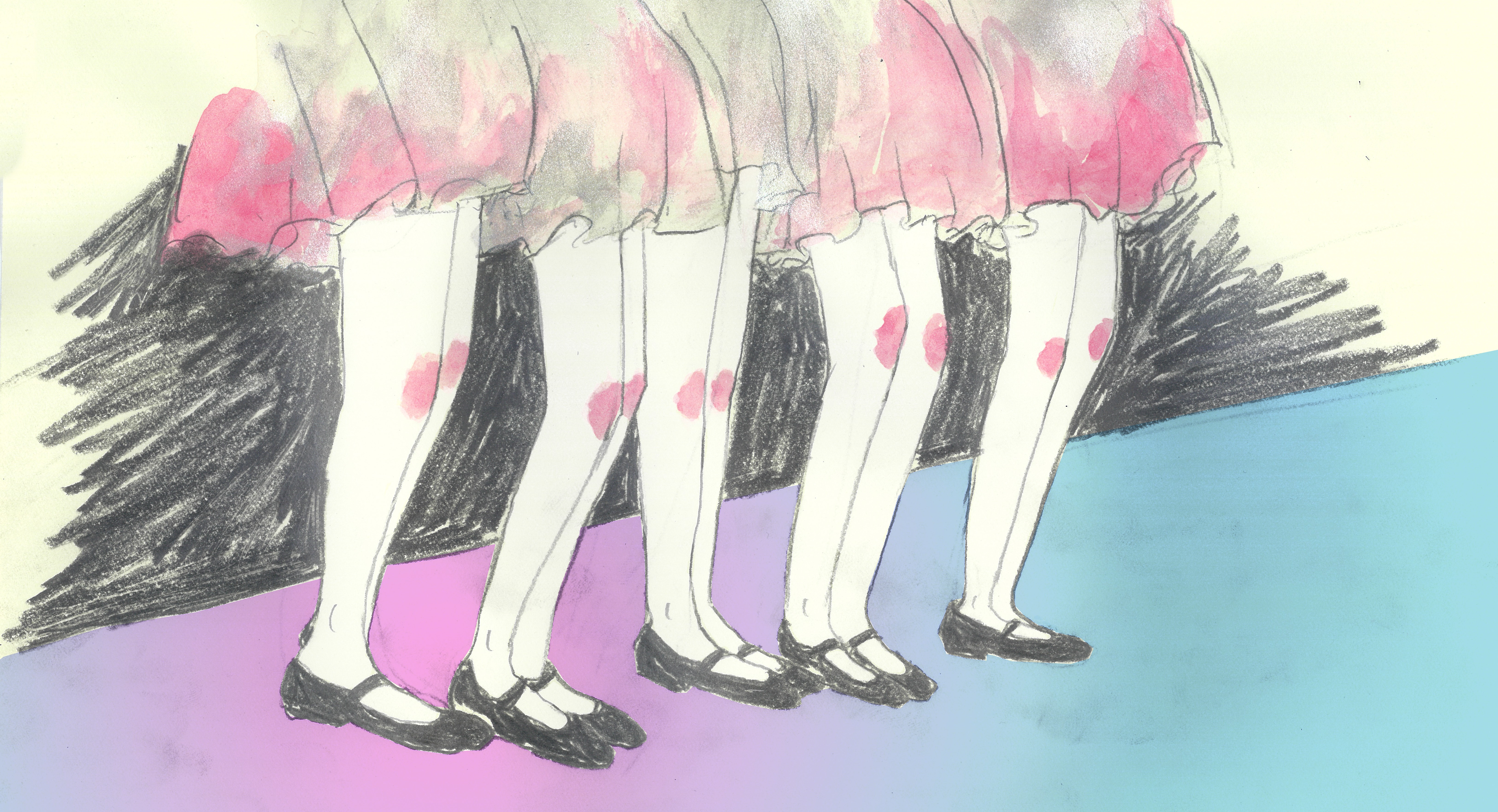
「春のをどり(愛の夢)」
女の子たち風船爆弾をつくる Girls, Making Paper Balloon Bombs
2023年6月19日(月)
開場 18:30 開演 19:00
王子ホールにて(東京都銀座)
企画 寺尾紗穂
選曲 寺尾紗穂・小林エリカ
脚本 小林エリカ
Script: Erika Kobayashi Song Selection: Saho Terao and Erika Kobayashi
Translation into English: Brian Bergstrom
出演 角銅真実 寺尾紗穂 浮 古川麦
Cast Manami Kakudo Saho Terao BUOY Baku Furukawa
音響/ミックス 葛西俊彦 Sound / Sound-Mixing: Toshihiko Kasai
ステージスタッフ 山本真純 Stage Crew: Masumi Yamamoto, Chiaki Yamaoka
録音 坂井伽寿馬 Sound Recording: Kazuma Sakai
照明 佐藤円 田中文恵 加茂郁乃 Lighting: Hitoshi Sato, Fumie Tanaka, Fumino Kamo
舞台監督 柴田果奈子 Stage Director: Kanako Shibata
撮影 玉田伸太郎 谷浦龍一 山倉一樹 渡辺真太郎 藤田恵実 Photography: Shintaro Tamada, Ryuichi Taniura, Kazuki Yamakura, Shintaro Watanabe, Megumi Fujita
編集 玉田伸太郎 Editing: Shintaro Tamada
メイク 青木謙樹 Makeup: Kenjyu Aoki
イラスト 小林エリカ Illustrations: Erika Kobayashi
デザイン 山野英之 Design: Hideyuki Yamano
ブローチ制作 森千尋 Brooch Designer: Chihiro Mori
翻訳 ブライアン・バーグストロム Translation into English: Brian Bergstrom
制作 村口栞理 瀧口幸恵 呉宮百合香 Production: Shiori Muraguchi, Sachie Takiguchi, Yurika Kuremiya
運営 湊川真弘 秋本将之 佐藤卓也 たかだうらら Management: Masahiro Minatogawa, Masayuki Akimoto, Takuya Sato, Ulala Takada
企画・選曲 寺尾紗穂 小林エリカ Arrangement / Song Selection: Saho Terao, Erika Kobayashi
主催 Sponsor: こほろぎ舎 Korogisha


English follows Japanese
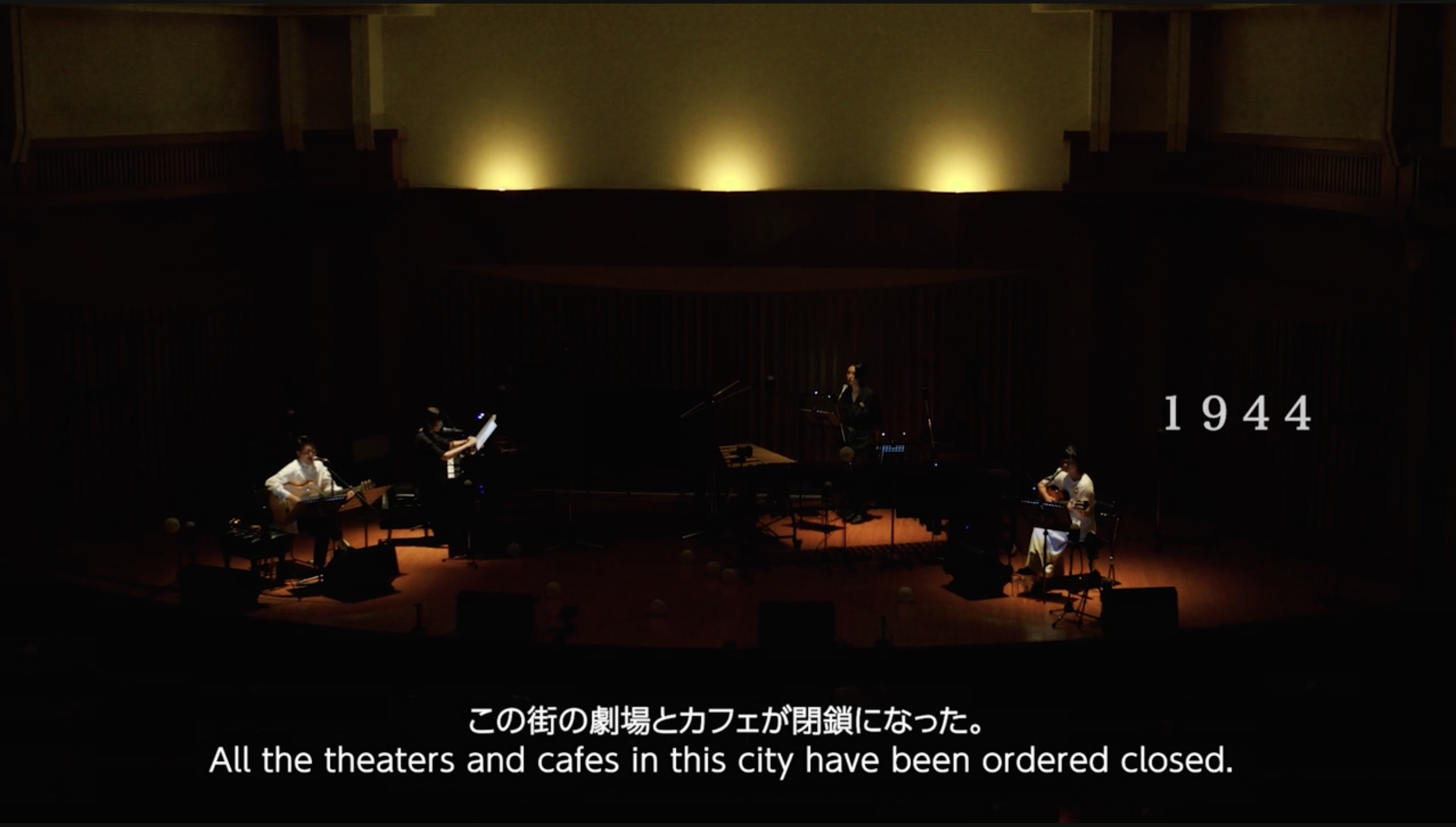
音楽朗読劇「女の子たち風船爆弾をつくる」は、第二次世界大戦中、実際に風船爆弾づくりがおこなわれた東京、有楽町に近い銀座、王子ホールで2023年に一日限りで上演された舞台の映像版です。
出演は角銅真実、 寺尾紗穂、 浮、 古川麦。映像版監督は玉田伸太郎。
こほろぎ舎の企画により、選曲は寺尾紗穂と小林エリカ、脚本は『女の子たち風船爆弾をつくる』(文藝春秋)の著者でもある小林エリカです。
この作品の背景となる、風船爆弾づくりのことをお伝えできたらと思います。
風船爆弾とは?
第二次世界大戦中に日本の陸軍登戸研究所で極秘に開発された、「ふ号」兵器です。目的は、アメリカの本土直接攻撃です。
原料は、国産の和紙とコンニャク糊。
生物兵器搭載も検討し牛疫ウィルスの開発も行いましたが、実現はしませんでした。
風船爆弾は、1944年11月から1945年3月末まで、太平洋側の海岸、千葉県一宮、茨城県大津、福島県勿来から約9300発が発射されました。偏西風に乗せ、太平洋上約8000キロを横断。アメリカ大陸へ到達したと考えられているのは約1000発。
風船爆弾づくりは、満州を含む日本全土、満州新京、山形、福島、埼玉、長野、小田原、静岡、岐阜、高岡、福井、鳥取、京都、島根、大阪、岡山、広島、山口、徳島、愛媛、高知、香川、八女、熊本、佐賀、大分で行われました。「手先の柔らかい若い女学生が和紙の貼り合わせに適している」ということで、全国の女学生たちが動員されました。
東京では、東京宝塚劇場をはじめ、有楽座、日本劇場の他、浅草の国際劇場、両国の国技館などでも風船爆弾づくりがおこなわれ、東京宝塚劇場に動員されたのは、雙葉高等女学校、跡見高等女学校、麹町高等女学校の女学生たちです。
アメリカ、オレゴン州ブライに到達した一発で、アメリカの民間人六人が死亡。
死亡したのは、ピクニックへやってきていたキリスト教超教派教会の日曜学校の生徒たちと、牧師を夫にもつ妊婦でした。 そしてそれが、第二次世界大戦中唯一の、アメリカ本土における犠牲者となりました。
第二次世界大戦中、風船爆弾の研究開発をはじめ、偽札づくりや化学兵器など、秘密戦兵器・器材の研究開発を行っていた陸軍登戸研究所、正式名称は第九陸軍技術研究所。その実態は、戦後40年近くもの間、知られていませんでした。なぜなら敗戦と同時に、軍が証拠隠滅を図るため書類を焼き人々には箝口令をしいていたからです。
しかし地元の高校教師と高校生たちが平和学習の一環としておこなった歴史の掘り起こしによりその歴史が明らかになり、地域住民たちの運動もあり、建物も資料館として保存されることになりました。
現在、陸軍登戸研究所の跡地は、明治大学平和教育登戸研究所資料館として開館しています。風船爆弾について興味を持った方たちは、ぜひ訪れてみてください。
本『女の子たち風船爆弾をつくる』
第78回毎日出版文化賞(文学・芸術部門)受賞
小林エリカ著(文藝春秋)2024
CD『しゅー・しゃいん』
寺尾紗穂(こほろぎ舎)2024
本『戦前音楽探訪』
寺尾紗穂著(ミュージック・マガジン)2025
音楽朗読劇「女の子たち風船爆弾をつくる」
初演 東京、王子ホール、2023年 出演: 角銅真実、 寺尾紗穂、 浮、 古川麦
企画: こほろぎ舎, 選曲: 寺尾紗穂、小林エリカ, 脚本: 小林エリカ, 制作: 瀧口幸恵、 呉宮百合香、 村口栞理
映像版監督: 玉田伸太郎,字幕翻訳: ブライアン・バーグストロム
2024年/本編95分/日本語、英語字幕あり
Dramatic Read Opera Girls, Making Balloon Bombs was originally staged for one day only in 2023 at Oji Hall in Ginza—near Yurakucho, Tokyo, where balloon bombs were actually manufactured during World War II—and was later released as a filmed version.
The performance featured Kakudo Manami, Terao Saho, Buoy, and Furukawa Baku. The filmed version was directed by Tamada Shintaro.
It was produced by Kohorogi-sha, with music selections made by Terao Saho and Kobayashi Erika. The script was written by Kobayashi Erika as well, based on her book Girls, Making Balloon Bombs (published by Bungeishunju).
We would now like to share some of the historical background of the paper balloon bomb production that inspired this work.
What Are Paper Balloon Bombs?
During World War II, Japan’s Noborito Army Research Institute secretly developed the “Fu-Go” weapon. The goal was a direct attack on the American mainland.
Balloons, about 10 meters in diameter, were filled with hydrogen and fitted with incendiary bombs and explosives.
The balloons were made from Japanese washi paper and konnyaku (konjac potato) paste.
Plans even considered carrying biological weapons, including the development of a rinderpest virus, though these were never realized.
Between November 1944 and the end of March 1945, about 9,300 paper balloon bombs were launched from Japan’s Pacific coast—Ichinomiya in Chiba, Otsu in Ibaraki, and Nakoso in Fukushima.
They ride the jet stream, traveling some 8,000 kilometers across the Pacific Ocean.
It is estimated that around 1,000 of them reached the North American continent.
Paper balloon bombs were manufactured across Japan—including Manchuria (Xinjing), Yamagata, Fukushima, Saitama, Nagano, Odawara, Shizuoka, Gifu, Takaoka, Fukui, Tottori, Kyoto, Shimane, Osaka, Okayama, Hiroshima, Yamaguchi, Tokushima, Ehime, Kochi, Kagawa, Yame, Kumamoto, Saga, and Oita.
Young female students nationwide were mobilized for the task, under the belief that their “nimble fingers” made them especially suited for pasting layers of washi paper together.
In Tokyo, paper balloon bomb production was carried out not only at the Tokyo Takarazuka Theater, but also at Yurakuza, the Nippon Gekijo, the Asakusa International Theater, and the Ryogoku Kokugikan.
At the Tokyo Takarazuka Theater, female students from Futaba Girls’ High School, Atomi Girls’ High School, and Kojimachi Girls’ High School were mobilized.
One Paper Balloon Bomb reached Bly, Oregon, killing six American civilians.
Those who died were Sunday school students from a Christian interdenominational church and a pregnant woman, the wife of a minister, who had gone on a picnic.
They became the only civilian casualties on the U.S. mainland during World War II.
During World War II, the Noborito Army Research Institute—formally known as the Ninth Army Technical Research Institute—conducted research and development on secret wartime weapons and equipment, including paper balloon bombs, counterfeit currency,
and chemical weapons. For nearly forty years after the war, however, its activities remained unknown. This was because, at the time of Japan’s defeat, the military sought to destroy evidence by burning documents and imposing strict silence on those involved.
It was only when a local high school teacher, together with his students, began to uncover the past as part of peace education that this hidden history was revealed for the first time. Thanks also to the efforts of local residents, the buildings were preserved and turned into a museum.
Today, the former site of the Noborito Army Research Institute serves as the Meiji University Noborito Institute for Peace Education, where materials are excavated, preserved, and studied.
If you are interested in learning more about the paper balloon bombs, I encourage you to visit the museum.
Book : “Girls, Making Paper Balloon Bombs”,
Kobayashi Erika, Published by Bungeishunjyu, 2024
Won the 78th Mainichi Publishing Culture Award
CD:しゅー・しゃいん(Shoe Shine)
Terao Saho(Kohorogisha)2024
Book : 戦前音楽探訪(Senzen Ongaku Tanpou)
Terao Saho(Music Magazine)2025
Dramatic Read Opera: “Girls, Making Paper Balloon Bombs”,
in collaboration with musician Terao Saho, at Oji Hall, Tokyo, 2023
Featuring Terao Saho, Kakudo Manami, Buoy, and Furukawa Baku
Script: Erika Kobayashi Song Selection: Saho Terao and Erika Kobayashi, Production: Kuremiya Yurika, Takiguchi Sachie , Muraguchi Shiori,Video Direction: Tamada Shintaro, English Translation: Brian Bergstrom,
2024 / 95 min / Japanese with English subtitles